One of the things I value most in my classroom is connection. Connection amongst students, connection between them and myself, and connection between what they are learning and their own lived experiences.
As I was teaching the recently-updated Somos 1 Unit 22 unit about hurricanes in the Caribbean to my Spanish 3 class, I spent a lot of time having class discussions to go along with the suggested readings in the unit. My students and I live in rural Kansas. Hurricanes don’t happen here, and many of my students have never been to an environment where hurricanes can even occur. We spent some time discussing the natural disaster that we as midwesterners are most familiar with: tornadoes. Discussing something closer to students’ lived experience and frame of focus really drove home the information they were absorbing about hurricanes in the Caribbean. When relating Hurricane María’s impact on Puerto Rico in 2017 to communities in our area that had suffered tornado devastation, students were able to relate and empathize far more.
Through these discussions about natural disasters and relief efforts, the theme of resilience and determination was recurring. At our core, human beings are extremely resilient. Following the suggested lesson plans for Somos 1 Unit 22, on the final day of the unit I asked my students a series of questions. I wanted them to think of their answers, and then I asked volunteers to share. (I did not blindly call on everyone, because this topic can be deeply personal and I didn’t want anyone to be put on the spot.) I asked students how fellow Kansans have shown resilience following tornadoes, how Puerto Ricans showed resilience after Hurricane María, if they consider themselves to be a resilient person, and who are some people in their lives that they consider to be resilient.
But before I talk about how students connected with the theme of resilience and what they ended up doing, let me back up. There are a few things I want to make clear!
- Everything that was happening during class was in Spanish: Everything my students heard and read was given to them in the target language. There was a ton of visual support with images and gestures, and sometimes footnotes were provided for out-of-bounds vocabulary. Most of what my students said back to me was in Spanish, too. Of course there were times that students wanted to make a point that they didn’t have the skills to get across in Spanish, so English was used, but I take opportunities like that to help students through by using circumlocution or changing some word choices to better fit their level of communication.
- They were prepared for the discussion about resilience because of everything that had previously happened not only in this unit, but the entirety of the courses they have had with me. This process is slowly adding new vocabulary terms (sheltering vocabulary, not dumping it on them with lists of 30+ terms), starting with narratives and familiar contexts (the Three Little Pigs fairytale, tornadoes for my Midwestern students), then building to informational texts with unfamiliar topics. I switch between verb tenses as appropriate, and I am sure to expose them to multiple forms of the verbs across tenses.
- Students were introduced to the topic of hurricanes in the Caribbean through a Shared Reading. During the reading, I asked personalized questions to connect students to the content. Following that, we played The Unfair Game® to review information we had discussed in the Shared Reading. (Side note, if you have not yet tried The Unfair Game® in your classes, you should! My students absolutely love it!) Students then did an individual reading about different hurricanes that have affected Puerto Rico in the past. Every new activity was recycling vocabulary terms that students were already familiar with or had been working with across multiple days now, and visual support was always included. On the day that was fully dedicated to learning about Hurricane María, we did a Shared Reading about the hurricane and how it affected the island and its people. Then, I set up a gallery walk with multiple comprehensible articles about different aspects of relief efforts across Puerto Rico after Hurricane María’s destruction. Students were able to choose which 6 articles they wanted to read, and then they had a note catcher asking them to identify obstacles/problems, heroes, and solutions/help. At the end of class, we all came back together to discuss what students had read and how it resonated with them.
Smashdoodle
Okay, back to resilience. After students had finished learning about hurricanes, and Hurricane María specifically, I asked them to define what resilience meant to them as a bell-ringer. We came up with various definitions in our own words (in Spanish) and I wrote them on the whiteboard for students to think over as we had a discussion. As I mentioned before, during the discussion, I asked students questions like: “How did Puerto Ricans demonstrate resilience following Hurricane María?”, “Do you consider yourself to be a resilient person?”, and “Who in your life do you consider to be a resilient person?”
Following that discussion, I asked students to create a Smashdoodle about resilience. I gave VERY few instructions. All I told them was that it had to relate to resilience as they thought about it in their own mind. This could be resilience of a character in a book/movie, resilience of a loved one, resilience of their own, or just a general blanket of what resilience is. I told them this was purely a wrap-up activity and that it wouldn’t be graded. I assumed my students would use the 15 minutes that remained in the class period to draw some stick figures or make a quick word cloud of related terms. BOY, was I WRONG! Fast forward to the bell ringing, and my students were in an uproar about how they didn’t have enough time to finish. Through our discussions and the questions I had led with, this topic had become very personal to them, and they wanted to finish their work. I was ready to move on to a new unit the following day, but when a class full of juniors and seniors is pitted against you wanting more time to work on something so they can do it right, you give the people what they want.
And WOW, am I glad I did! After another 20 minutes or so the following day, I received some truly great examples from my students showcasing what resilience means to them.
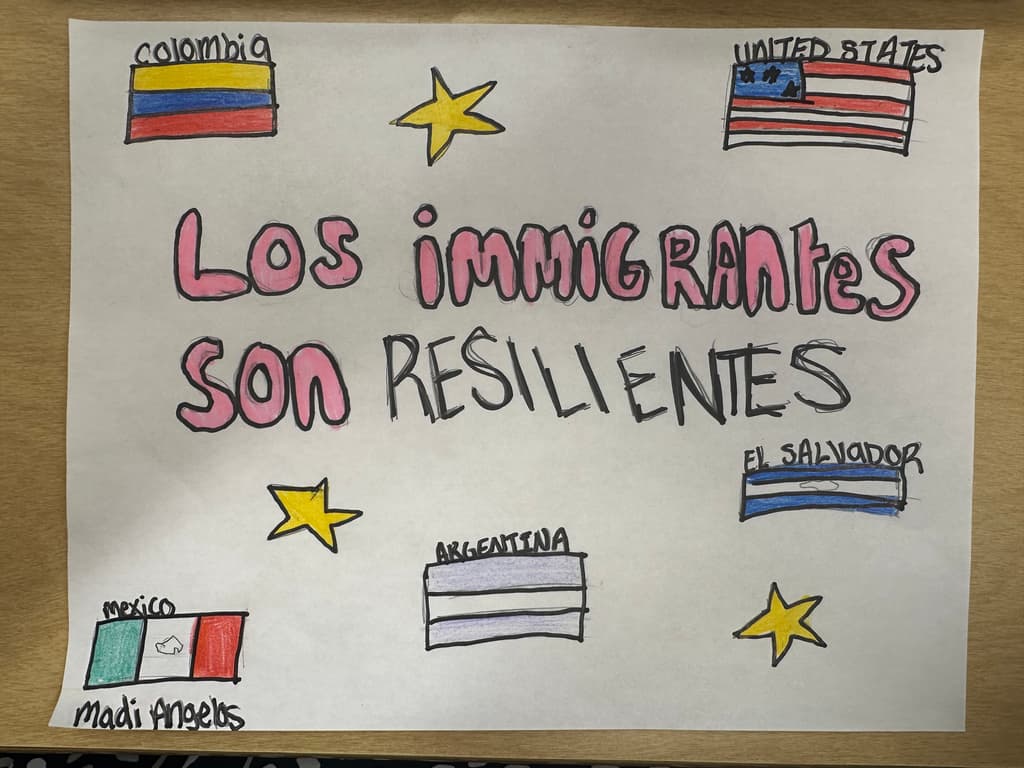
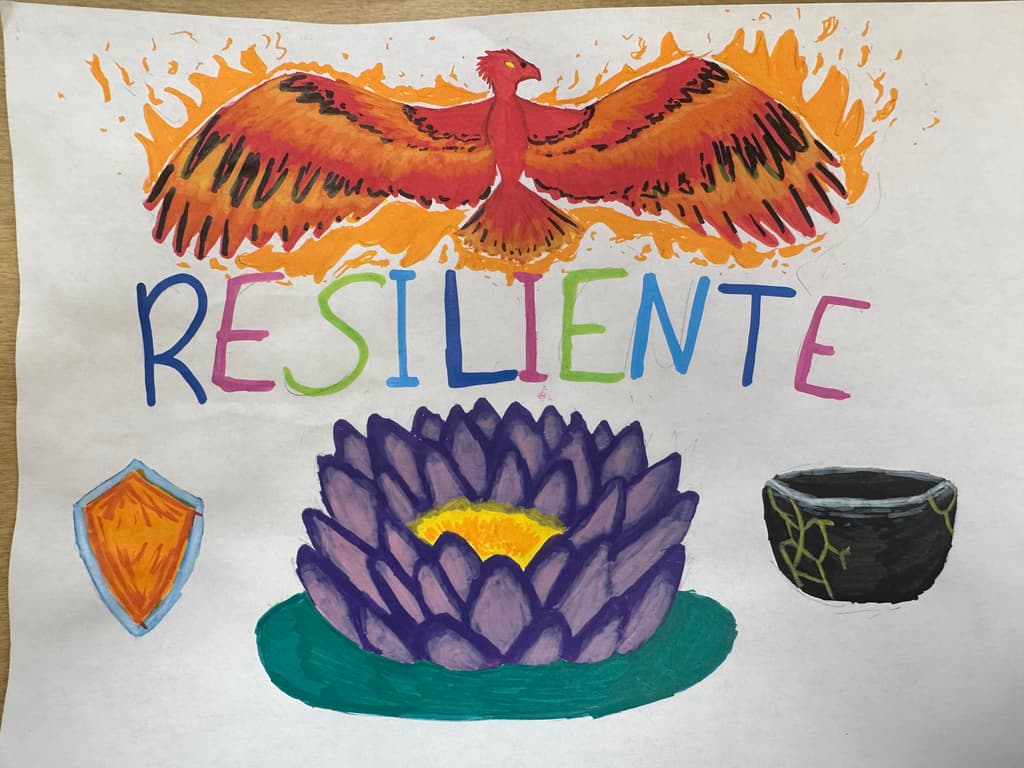
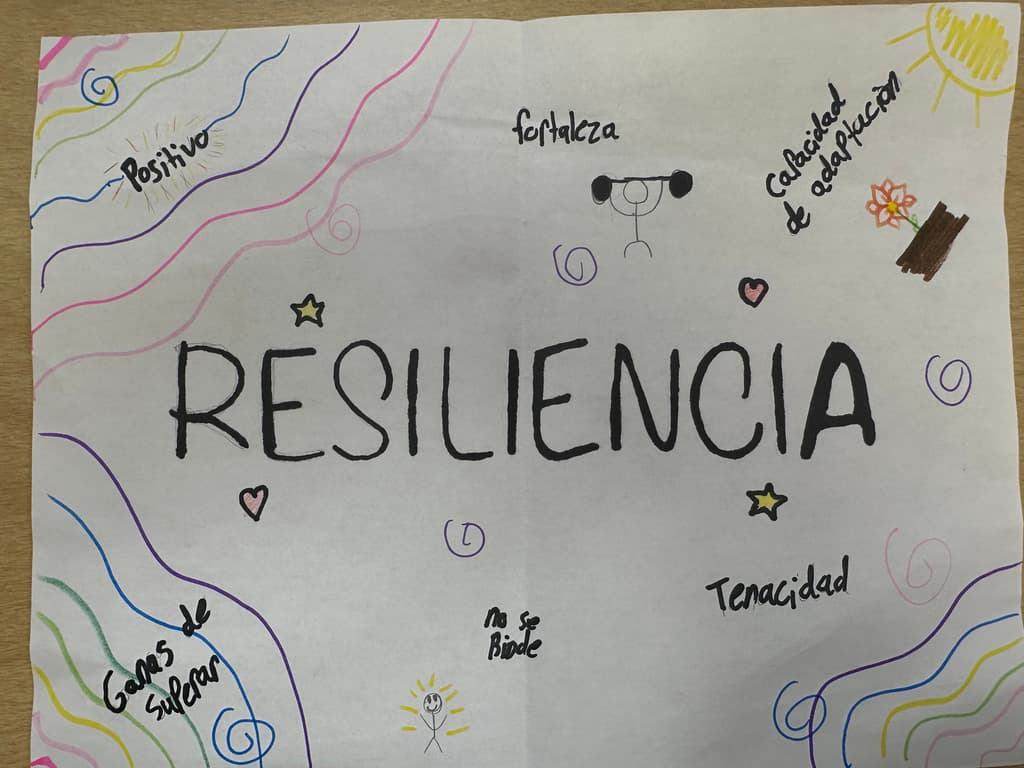
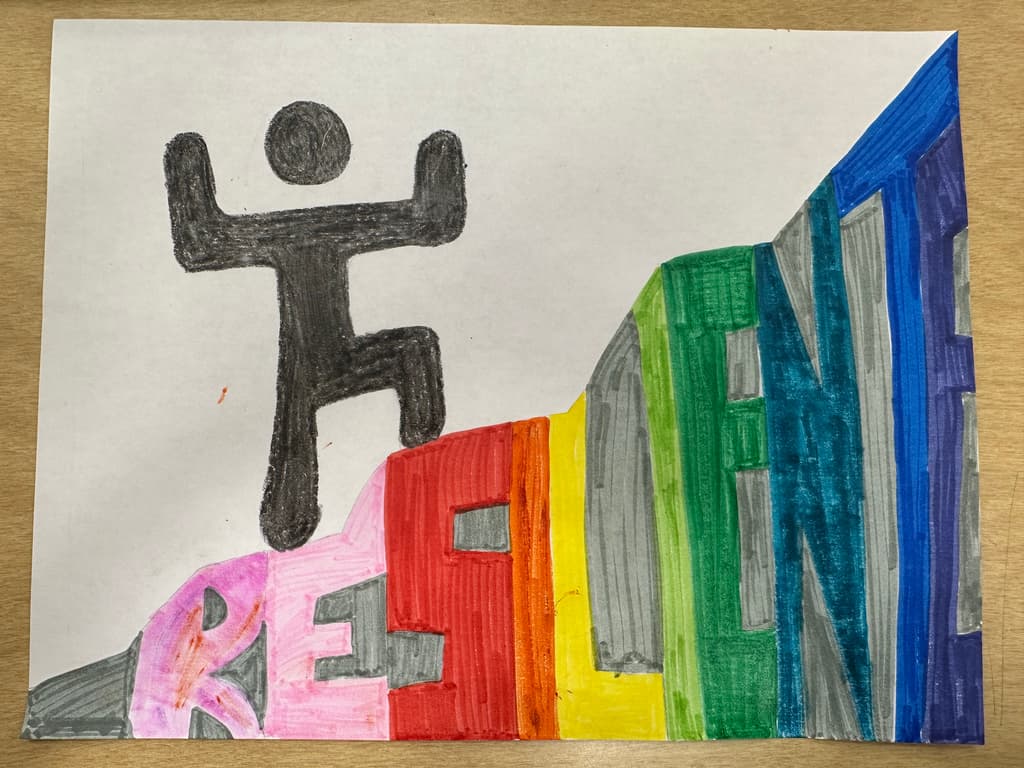
I love an open-ended assignment like this because one of my greatest joys in the classroom is getting to witness my students’ creativity and observe how the content resonated with them on a personal level. While some students kept their SmashDoodles a little more basic, others made theirs deeply personal or specific.
What could this look like in your classroom?
What really makes me proud when I look at these final Smashdoodles isn’t the final product itself. Some of their artwork is really incredible, and it’s visually appealing to look at, but what really matters to me is what the final product represents! When I see these pieces, I know that we have succeeded in making a true connection. I can tell my students have understood what we studied in this unit at a deep level, because they are not just regurgitating facts to me: they’re applying what they’ve learned to a new context that means something to them.
If you are reading this post and thinking, “I would LOVE for my students to do that!”, the next step shouldn’t be to go learn about Smashdoodles. The end product could be anything, it’s not about the assignment! If you want your students to do something like this, the next step is to learn more about authentic communication. Throughout the entire unit of study, my students communicated using stories, whole-class communication about their lives, and reading and listening to lectures on informational topics using vocabulary that they can understand. They did a whole lot of reading and listening, and they shared their thinking by writing and talking using words, phrases, and only sometimes sentences. What we did in class was real every day, and what makes these Smashdoodles great is that they are my students’ real, authentic ideas.
I am always incredibly proud of what my students are able to accomplish and how they are able to use their language skills. Teaching for acquisition gives my students far more confidence that they can be successful in taking risks with the language than I ever observed with my students during my first five years as a teacher when I was (regretfully) using a textbook. Keeping language meaningful in a way that connects with students helps personalize each student’s experience and how they relate to the content. And ultimately, being able to form these connections and foster a love of learning and personal growth in my students while speaking in the target language can’t be beat!
About the writer:
Rebecca Werthmann is an award-winning Spanish educator at Goodland Jr.-Sr. High School in Goodland, Kansas, and the 2026 Kansas World Language Teacher of the Year. With over a decade of teaching experience, she is passionate about making language learning engaging, accessible, and meaningful through comprehension-based instruction. Rebecca serves as the Northwest Regional Representative for the Kansas World Language Association and regularly presents at professional conferences. She is also a published author, curriculum contributor, and advocate for equitable access to language education. Her work emphasizes building communicative confidence, fostering intercultural understanding, and empowering students to connect beyond their communities.