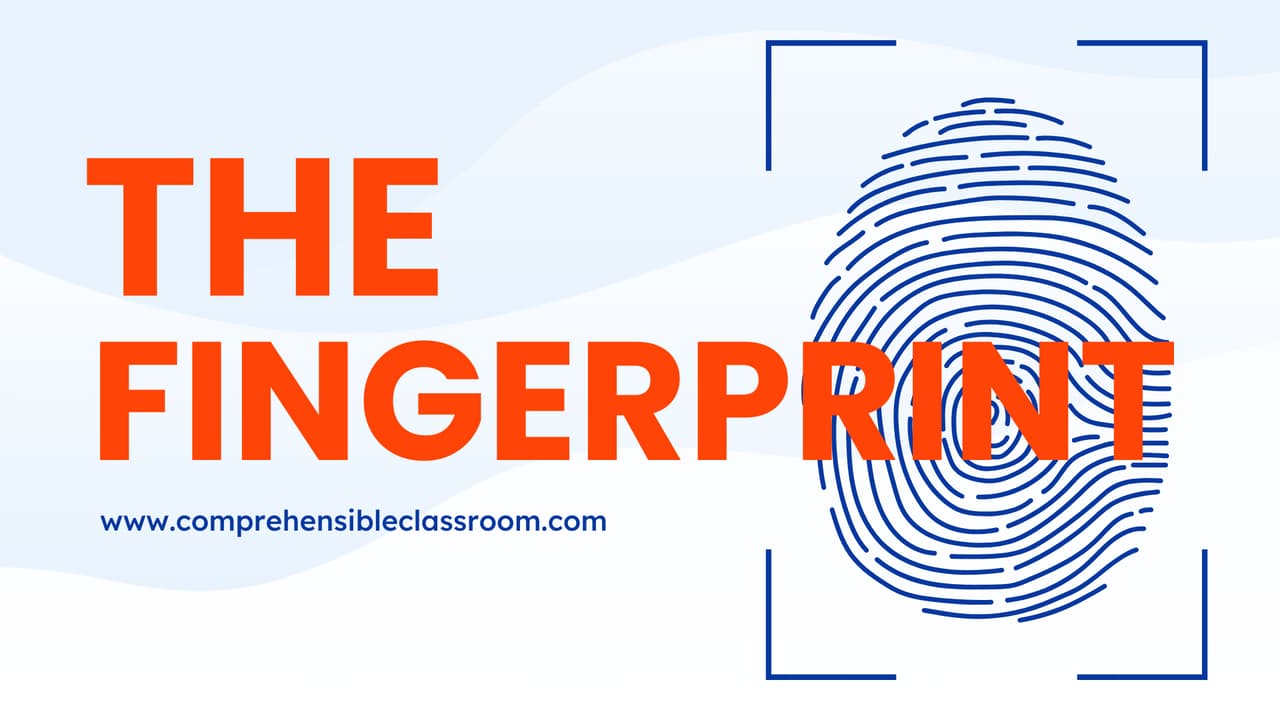
For the longest time, when you got a new phone, one of the first things it would ask you to do is set up your fingerprint.
And to do that, you don’t just press your finger on the sensor once and call it good. You have to touch it again. And again. And again.
Roll it to the left. Shift to the right, you try a new angle. Each time, the device picks up more data; more ridges in your fingerprint. You can watch it filling in the digital representation of your fingerprint on the screen until it finally has enough data and your fingerprint is complete.
It’s that robust, repeated exposure to your fingerprint that allows you, in the future, to barely touch your device with your finger, and it unlocks. Once it’s there, it takes essentially no effort to use it.
Acquisition is a lot like registering a fingerprint. You don’t build fluent, automatic language ability from one exposure. You build it through repeated, meaningful interaction with language, by seeing and hearing the same patterns in different ways, over time, in different contexts.
This is why we repeat stories in class. It’s why we ask follow-up questions. It’s why we read an article and then discuss it, and then write a summary about it, and then read about it in a different way. In The Somos Curriculum, it’s why we use the same Core Vocabulary in conversation, stories, and informational contexts in a unit, and why we never stop using it when we move onto new units. Each repetition helps students’ brains fill out the “scan” of how the language works. The goal of repetition isn’t memorization; it is deep, implicit understanding.
You see, acquiring language isn’t just about learning what individual words or pieces of words mean. It takes more than that. Whenever your brain is exposed to language, it is studying how words and pieces of words behave: how they combine, how they shift in different contexts, what roles they play in the sentence. Your brain is a lifelong language learner, and it’s doing it without your conscious awareness. When students acquire language, they are not just storing the meaning of isolated words; they are building a new system in their minds.
So when we repeat a story or recycle a structure, we’re giving the brain a chance to get beyond the surface meaning and to notice and process the underlying patterns: where the verb goes, how questions are formed, what endings signal who’s doing what. Bit by bit, the system becomes internalized. And with that internal system, students don’t need to remember a rule or pull up a chart, they just know what sounds right.
Just think about how annoying it is to have to remember passwords. Or lookup passwords that you don’t remember. Or reset passwords that you have given up on trying to remember. Remembering the password is a pain. But with biometrics, once your fingerprint is registered, you don’t have to stop and think. You don’t have to dig out a notebook or ask for a hint. You just touch the sensor, and you’re in.
Harkening back to The Attic metaphor, It’s the difference between declarative memory (the Attic stuff) and procedural memory (the everyday stuff).
We want biometric access for our students. To communicate without having to think about how to put together the words to say what they want to say. And how we get there is repeated exposure. From different angles. In different contexts. Through stories, songs, conversations, and re-readings. Every pass is a new scan and every exposure refines that fingerprint.
Acquisition doesn’t happen in an instant. You have to fill out that fingerprint.
--------------------------
If the ideas in this post resonate with you, you are welcome to share this metaphor with credit to Martina Bex from The Comprehensible Classroom, along with a link to the blog post or video. Learn more about giving credit here. Review our Content Use Policy for guidelines on sharing, adapting, and distributing our content.