It is that time of the year: Conference Season! Many of us leave the classroom, spend the extra time on sub plans, and travel, close or far from home.
If you are like me, you attend conferences to stay in the know, to learn from others, and to evaluate your own practices. If you are like me, you also absorb the energy that surrounds you: sitting next to a veteran teacher who is telling a rookie how to connect with the students in their new community, making it sound like second nature. Remembering why you love teaching. Sharing ideas with that cool teacher that sat next to you for the session. Finding out that something you are already doing is presented as a new best practice, and more!
This season… I was not feeling it so much. And when I attended a regional conference a few weeks ago, that “off’’ feeling finally clicked. I am not saying the problem was this conference. This is just the place where I connected the dots. I was, instead, moved to a different kind of thought: What is happening with our collective mind? Why are language educators so many times fast to disregard the value of the language we use when intentionally creating resources for our classrooms and at the same time, we are letting AI be a big part of “resource creation” without a second thought?
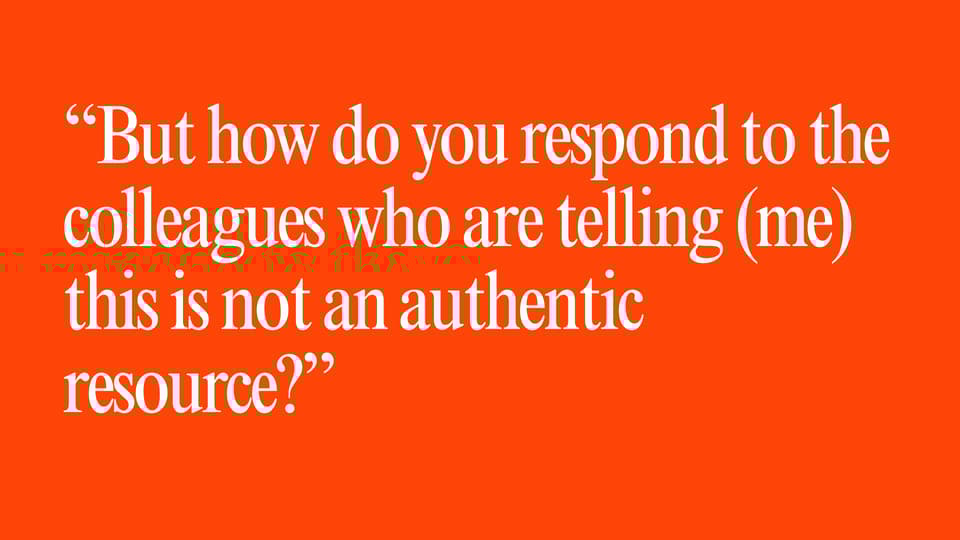
I was in a session where the presenter modeled how by using her story, her family roots, and infographics that she creates she is able to generate engagement in her class. One of the participants, a young man in the first years of his career asked this question: “But how do you respond to the colleagues who are telling (me) this is not an authentic resource?”
According to ACTFL, an authentic resource is something that is created by and for native speakers of the target language for real-world purposes. Because this teacher had created the materials for her students, they were not–by definition–authentic.
That got me thinking. After asking the presenter if I could respond, my reflection was something like this: "We know languages are living organisms that evolve and change. Spanish teachers have been told that RAE (Real Academia Española) dictates what is "correct" language. But we know that speakers of the language all around the world create, mold, and form new language CONSTANTLY! I mean, you can see teenagers from Spanish speaking countries like Argentina saying things like 'No te voy a espoilear la película' (I won't spoil the movie for you). RAE’S dictionary did not approve it to include it in the dictionary, yet it is a valid creation of language. It would be like saying that all the memes heard in the classroom in English are not the language.
As scientists of the language, we can find so many examples of these evolutions in our own language just by looking for them. So my dear colleague, frankly you are using the language to talk genuinely, authentically (wink, wink!) with your students. Who is then arguing that the language written, read, and spoken in your school setting is NOT language?"
This response was received with applause, one that said “Thank you for saying what I was thinking."
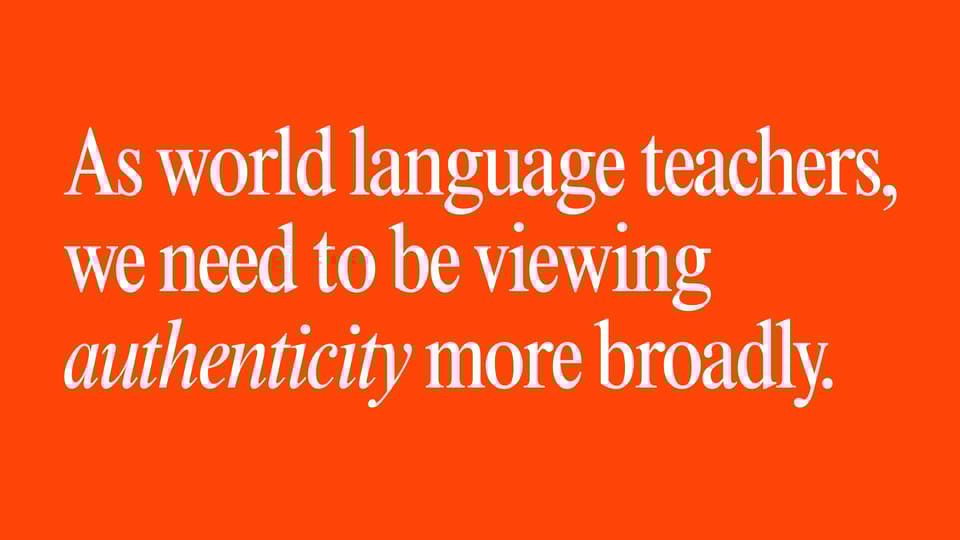
I believe it is time that we, as language teachers, begin viewing authenticity more broadly, valuing not only authentic resources but also authentic communication.
The question of authenticity did not end for me in that session.There were SO many sessions that offered content about AI! Again, not only this conference. It’s plaguing our newsletters, blog posts, and professional forums. I don’t think I attended any session in this conference where AI wasn’t mentioned. I heard a presenter saying how useful it is to present different accents to the students, others saying this would be a valid resource for immersion (the chatbots/videobots that “talk” with you).
While I went through the days I couldn’t help but thinking: we have, on one hand, teachers–humans, a human, producing language with students. On the other hand, we have AI. Now, I would argue this is very contradictory. I mean, why, then, in our profession we consider less authentic a resource written for a language learner, and it is ‘refreshing’ valued, when we use something created by a non-living entity? I’m not saying that all the resources are created equal, but I see, hear and have the privilege of working with Language Educators who are creating from their unique perspectives, bringing their culture to the table when they create, this being their heritage, their country of origin or maybe, the beauty of an identity as a citizen of the world.
I’m asking you to rethink and to review our collective thinking. Let’s value those who, as any other speaker of the language, infuse the language with their production, as a content creator, over a very fast computer which mimics human communication, but doesn’t have a heart in the culture.
Humanly yours,
Andrea
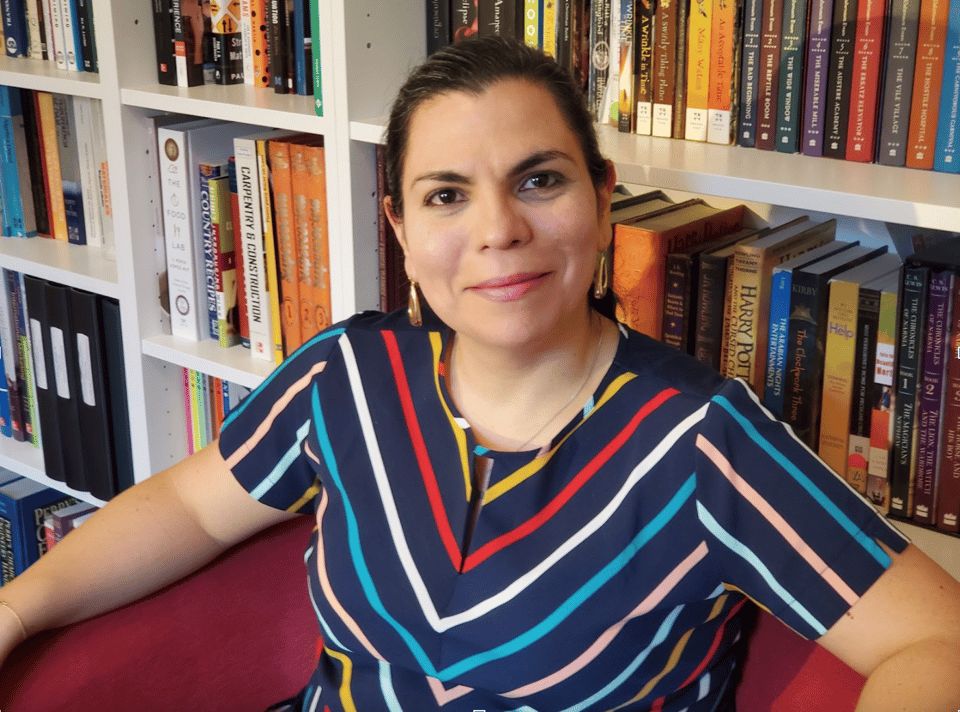
Andrea Giganti Dima is a Spanish Language educator and curriculum developer born in Buenos Aires, Argentina, "La Reina del Plata," where once upon a time she was a lawyer. In 2015, she set out to become a teacher of the Language in which she learned to love words, and to share the many bridges it builds. She has been fortunate to train with several exceptional acquisition-driven educators.
Andrea enjoys writing and storytelling, sharing her love for learning new things while introducing others to the Spanish language. She began editing and proofreading Spanish readers several years ago, creating resources, lessons, and curriculum, and collaborating with talented authors. Since 2019, she has been a Curriculum Developer and a Voice Artist for Garbanzo for the Comprehensible Classroom.
She loves working with her private students, creating a safe, open-minded space to explore their interests while acquiring Spanish.
She has worked with medical professionals who wish to communicate effectively in Spanish with their communities. Andrea believes in the power of synergy and the importance of teamwork. She loves working with both younger and older students, and she finds immense joy in witnessing their transformation from a mindset of "I am not good at Spanish" to one of continuous, enthusiastic learning.